Bearing Witness: My Minidoka Pilgrimage
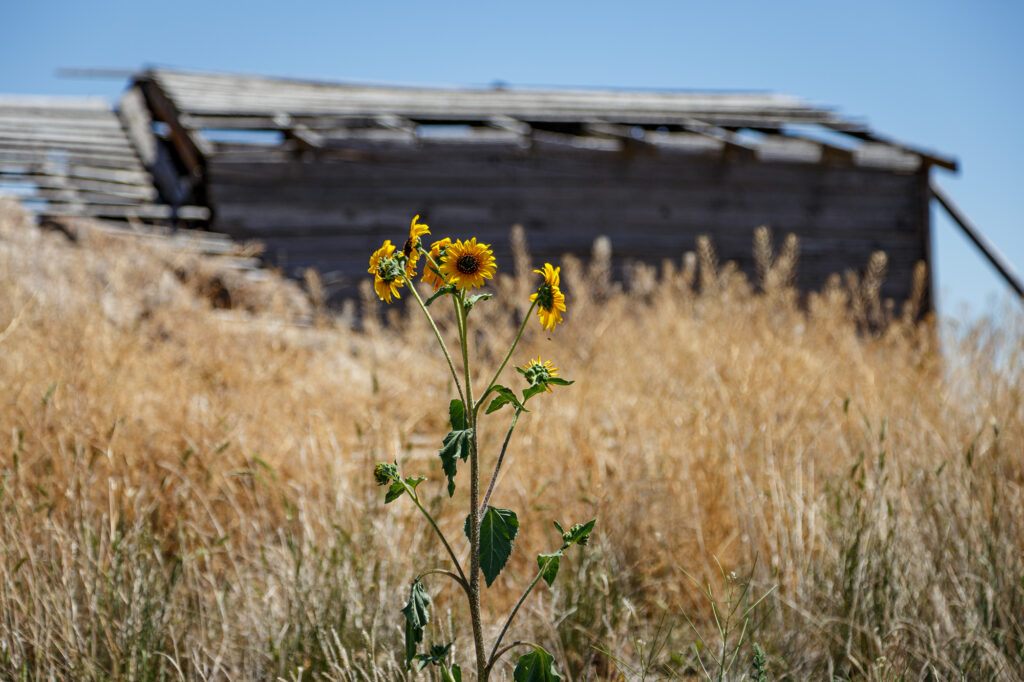
My eyes welled with tears as I turned onto Hunt Road and drove along Clover Creek toward the visitor center. I was expecting the dusty, barren and isolated landscape my grandmother once described when she recounted her days at Minidoka, the Japanese American incarceration camp in southern Idaho during WWII. Instead, the lush and verdant surroundings reflected the legacy of the incarcerees’ labor in this now thriving farmland.
My 81 year-old mother wasn’t in condition to travel with me from Hawaii to revisit the camp where she took her first steps and spoke her first words. Thankfully, her sister Corinne and my cousin Amy were able to join me on this pilgrimage and provide emotional support. They filled in many gaps with information, stories and anecdotes they heard over the years.
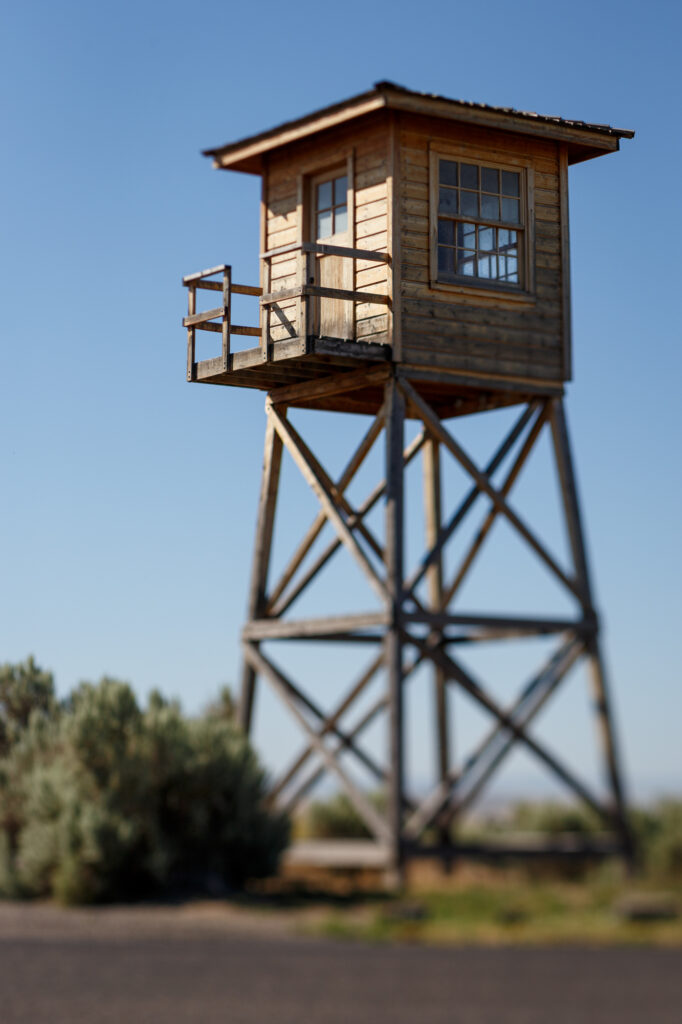
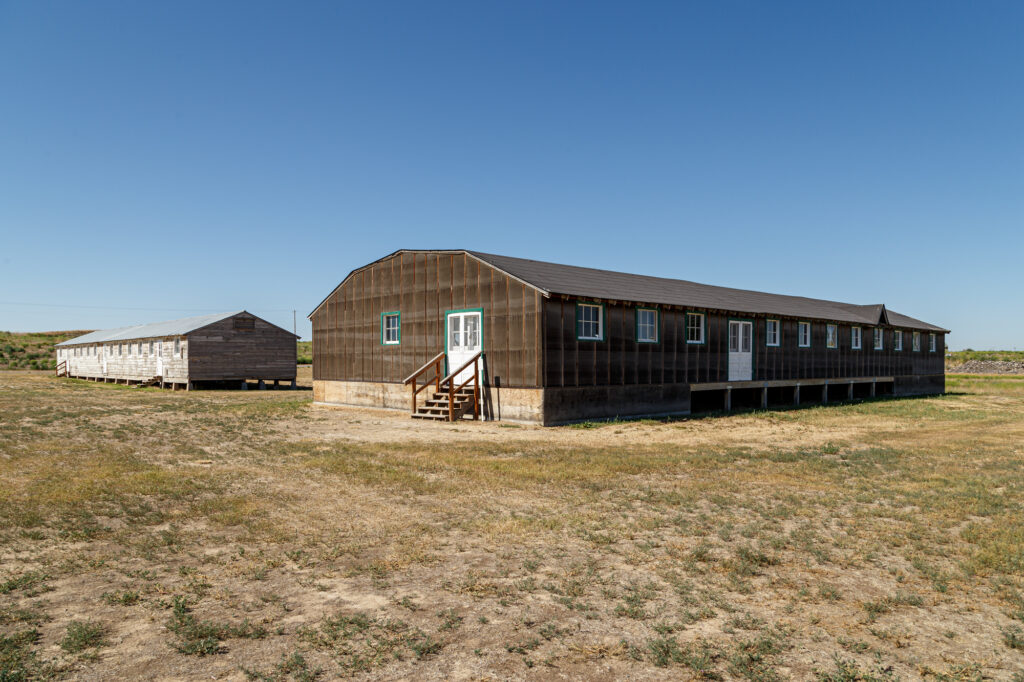
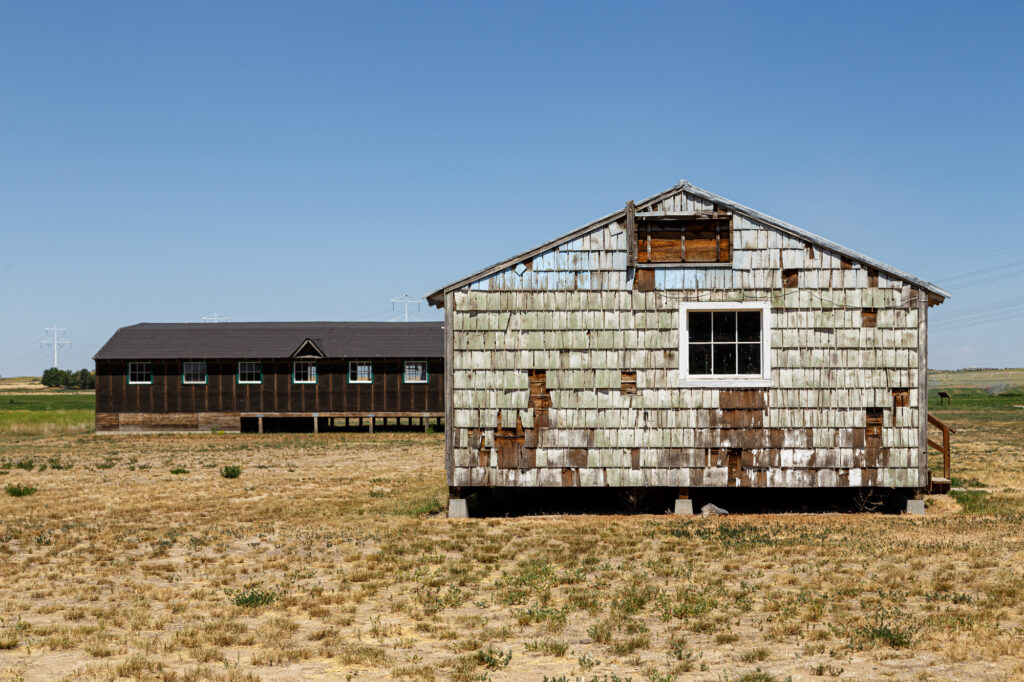
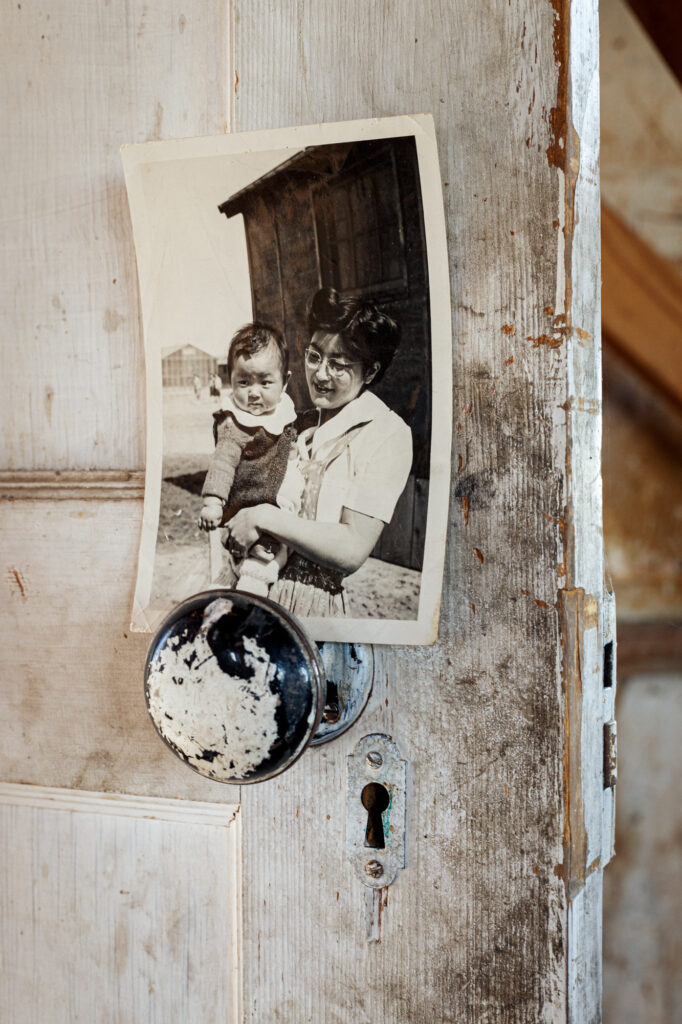
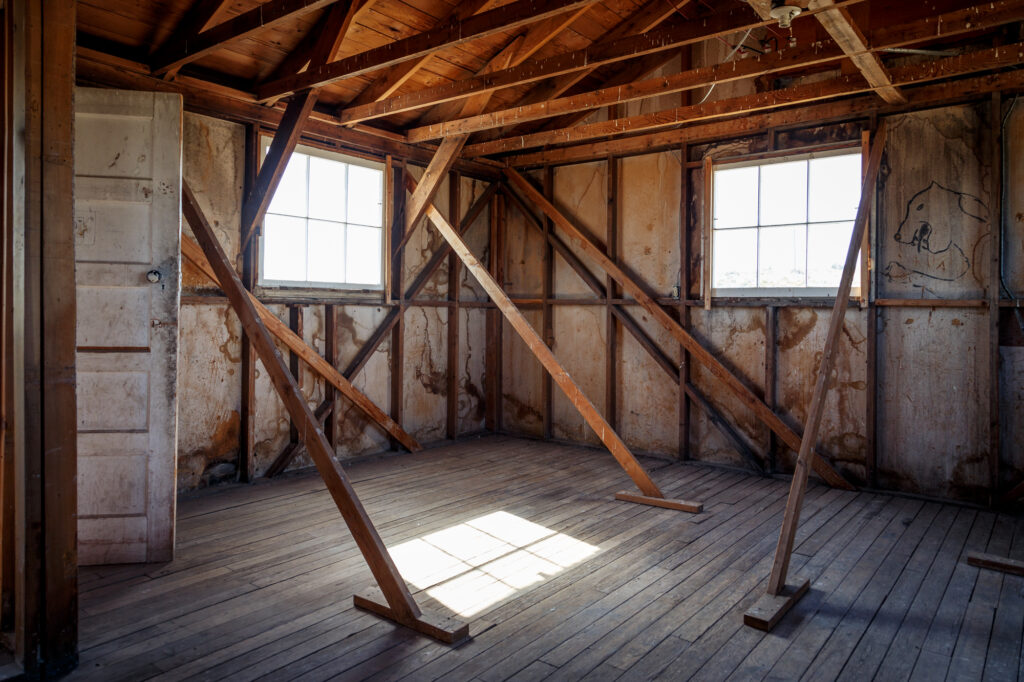
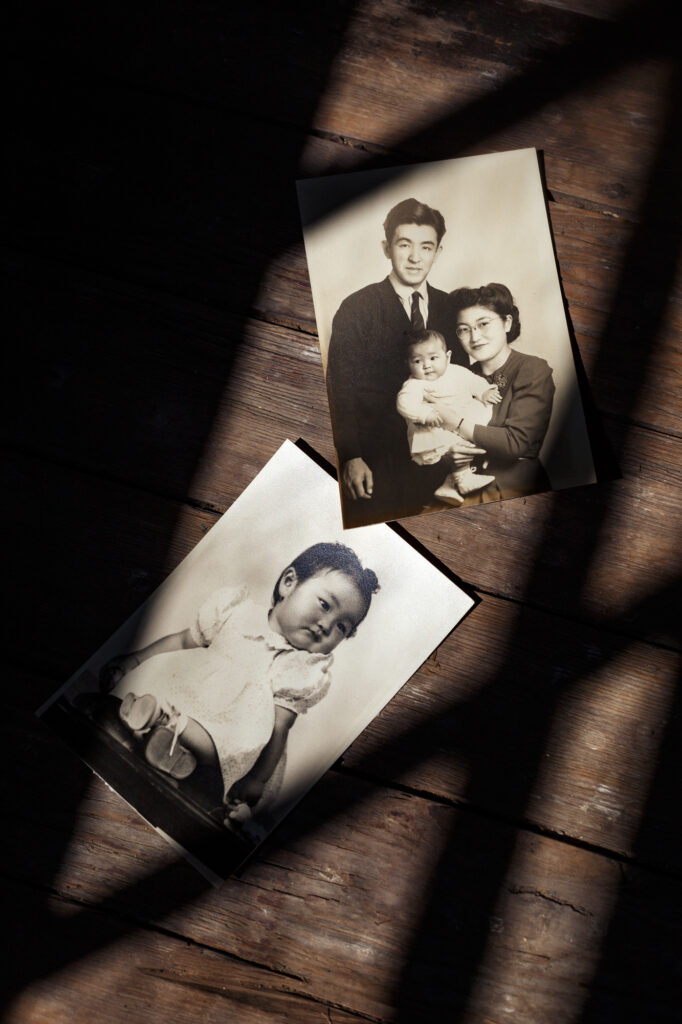
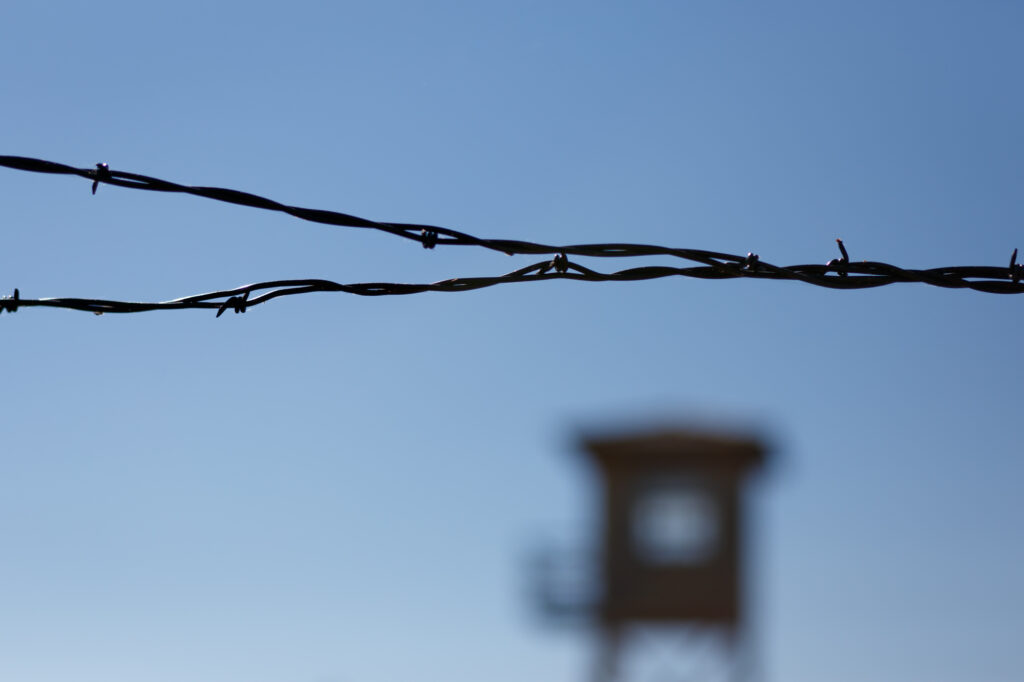
I attempted to document my pilgrimage for myself, my mother, my children and future descendents by photographing the remaining structures, such as the mess hall, root cellar, baseball field and guard tower. During our tour, we learned that one of the few surviving barracks and the only one open for tours is barrack #12 of block 22, the very one that my mother and her parents along with several other families had occupied for three years! In it, I photographed artifacts I brought with me – portraits of my grandparents and infant mother and the shogi set that my grandfather carved from crate wood. These still lifes reunited the memories of a young family with their stark living quarters.


Note: Asterik indicates photographic print in exhibit at Downtown Art Center